The Journal · How to Thanksgiving #2
How Much Beef Per Person, and Two Ways to Roast a Strip Loin
225g a head, a thermometer, and a choice: rustic and herby, or classic with a mustard crust. Same joint, same temperatures, two very different tables.
Kester Hodgson · Thu, 26 November 2026 · 3 min read
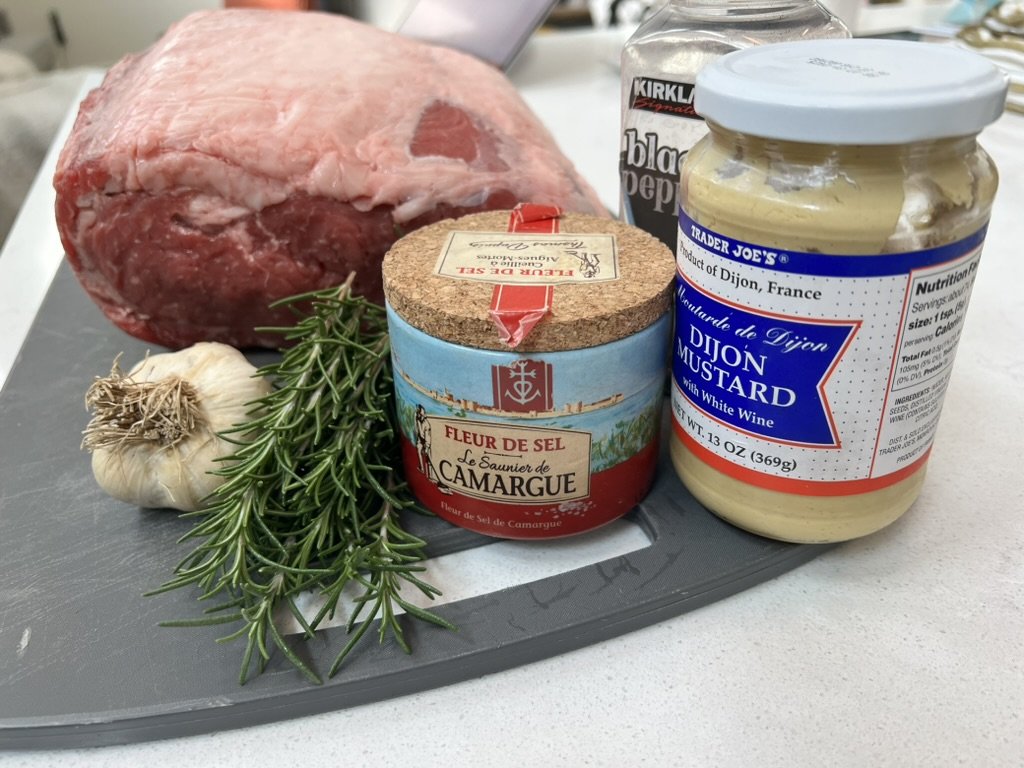
Turkey on Thanksgiving is the law. But I'm a Brit, and a table this size wants a proper joint of beef as well. So this year we're doing both.
The beef is a whole boneless strip loin. Here it's sold as a New York strip roast. In Britain you'd ask for sirloin. It's a brilliant joint for a crowd: an even shape, so it cooks evenly, a fat cap that bastes it as it roasts, and it carves like a dream.
How much do you actually need?
Here's the maths, because it's the question everyone gets wrong in one direction or the other:
- Boneless: about 225g (½lb) raw per person. 225g × 9 = roughly 2kg (4½lb).
- Want leftovers? Go to 2.5kg (5½lb). Cold rare sirloin in a sandwich the next day is worth the extra.
- Bone-in: allow about 350g (¾lb) per person, so 3–3.25kg (6½–7lb) for nine.
Ask the butcher to leave about 5mm (¼in) of fat on top, and to tie it if it's uneven. Thin ends overcook.
Forget the clock. Buy a thermometer.
Timings per kilo are a guide, not a promise. Ovens lie, joints are different shapes, and "medium-rare" means something different to everyone at the table. A probe thermometer takes all the guesswork out. Pull the beef at 50–52°C (122–126°F) for medium-rare. It climbs to about 55–57°C (131–135°F) while it rests. The recipe has the full chart, plus the thumb test if you've got no thermometer.
Two other things matter more than any seasoning:
- Take it out of the fridge an hour or so before. A cold centre means a grey outside by the time the middle is done.
- Rest it for 20–30 minutes. Loosely covered. It finishes cooking, the juices settle, and you get time to make the gravy. It'll sit for 40 minutes without harm if dinner's running late.
Two ways to cook it
I couldn't decide between two styles, so I asked Q-Tip to write me both. They're two very British ways of thinking about a Sunday roast.
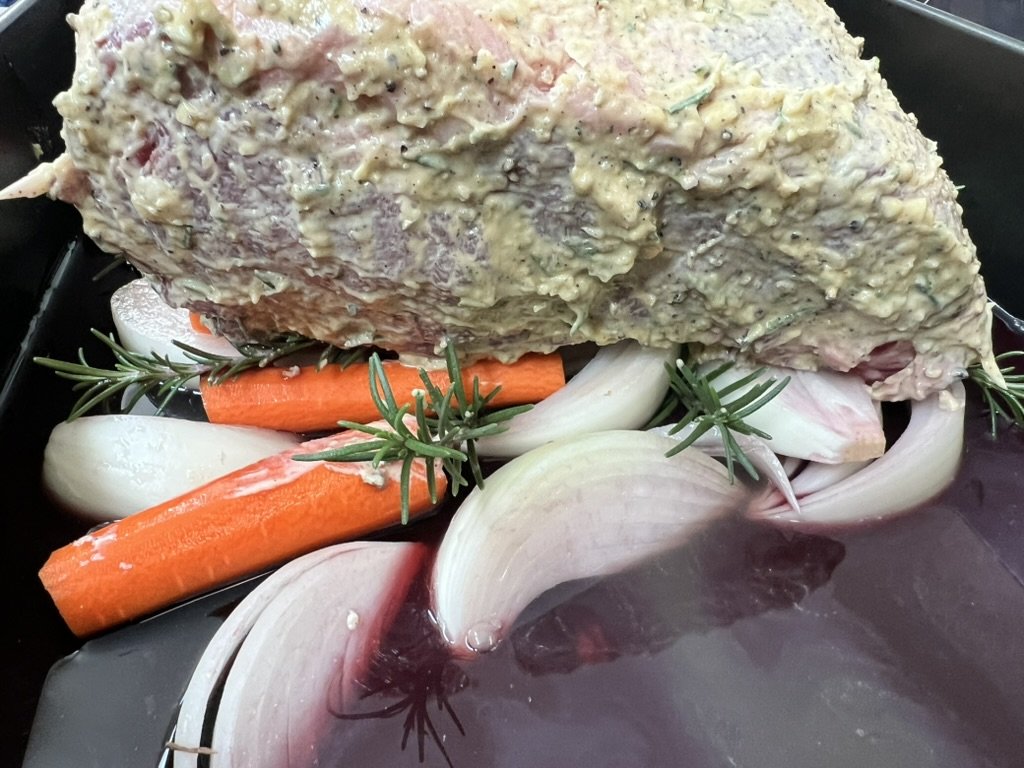
The rustic one: herby and loose. This is the style you'd associate with Jamie Oliver. Big handfuls of rosemary bashed up with salt, pepper, lemon zest and olive oil, rubbed all over. The joint sits on a bed of rough-chopped onion, carrot, celery and whole garlic cloves. You give it a hot 15 minutes at 230°C / fan 210°C / 450°F / gas 8, then turn it down to 180°C / fan 160°C / 350°F / gas 4. The veg go sticky in the tin. You deglaze with red wine, squash everything into the liquid, add stock and sieve it. It's punchy, a bit messy, and you carve it thick.
The classic one: precise and dependable. This is more in the Delia Smith spirit. English mustard powder and flour pressed into the fat, the joint sat on a halved onion, 20 minutes hot, then down to 190°C / fan 170°C / 375°F / gas 5, basted once. The gravy is a proper roux made in the tin and whisked until it's smooth and glossy. It's tidy, it's traditional, and you carve it thin across the grain.
Neither is copied from anyone's book. They're original methods built around those two attitudes to cooking. Both sit in one recipe card so you can pick on the day.
Things that go wrong
- Carving straight away. All the juice ends up on the board instead of in the meat. Rest it.
- Skipping the trivet. Sitting the joint on veg or onion keeps the bottom from stewing, and it gives you the base of your gravy for free.
- Mustard and gluten surprises. The crust has both, and so may your stock. Check before your guests sit down.
What goes with it
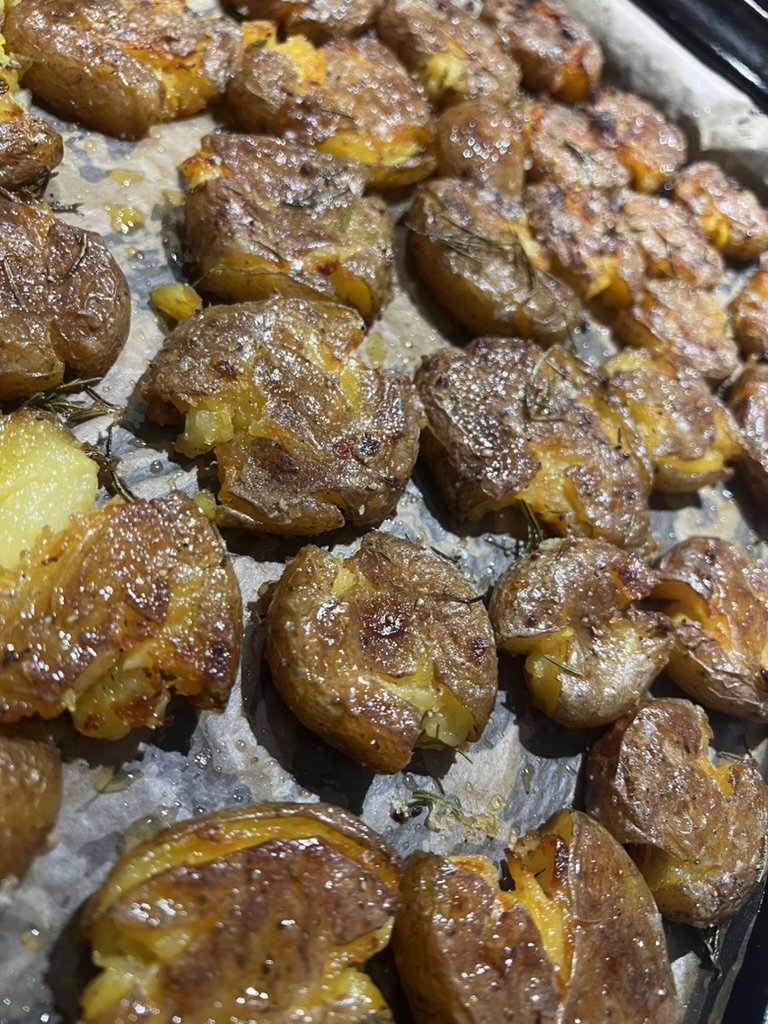
Crispy smashed potatoes if you want something easier than roasties. The sausage, apple and apricot stuffing if it's a feast. If it's Christmas rather than Thanksgiving, our mustard and horseradish crusted roast beef is the more festive cousin.